Minimally Invasive Facial Rejuvenation Surgery
Using the endoscopic facelift technique, Dr Ivo lifts and tightens facial tissue, improving the appearance of the cheeks and jawline with minimal scarring and a fast recovery time.
The endoscopic facelift is a minimally invasive surgical procedure that uses a small camera and specialised instruments to rejuvenate the face. Unlike the longer incisions required by traditional facelift surgery, the endoscopic approach uses several small incisions which can be hidden in the hairline.
As we age, the skin and underlying tissues of the face begin to sag. Wrinkles form across the forehead. The brows droop downward. Facial muscles weaken and lose their support. These changes can make you look older and more tired than you feel. The endoscopic facelift, also known as the ‘Ponytail’ or ‘Scarless’ Facelift, offers a way to address these concerns through a less invasive approach that still delivers natural looking results.
What is the Endoscopic Facelift Procedure?
The endoscopic facelift is a surgical procedure that uses advanced technology to rejuvenate the upper, mid and lower face. The technique relies on an endoscope, which is a thin tube with a tiny camera attached to one end. This camera sends images to a screen, allowing Dr Ivo to see the underlying facial structures in great detail.
During the procedure, Dr Ivo makes several small incisions, typically three to five, hidden within the hairline. Each incision is usually less than one centimetre in length. Through these tiny openings, he inserts the endoscope and specialised surgical instruments.
The endoscope provides a magnified view of the muscles, tissues, and structures beneath the skin. This allows Dr Ivo to work with great precision. The forehead muscles can be adjusted, excess tissue can be removed, and the remaining structures can be repositioned and tightened.
One of the key advantages of the endoscopic facelift is that it does not require Dr Ivo to lift large areas of skin away from the underlying tissue. This means less disruption to blood vessels and nerves. The result is reduced bruising, less swelling, and a quicker recovery compared to traditional facelift techniques.
The procedure is particularly effective for addressing the upper face and brow area. It can lift drooping eyebrows, smooth forehead wrinkles, and reduce frown lines between the eyes. When combined with other techniques, the endoscopic approach can also improve the midface and restore a more youthful contour to the cheeks.
The endoscopic facelift is typically performed under general anaesthesia and takes approximately two to three hours to complete. Patients go home the same day after a period of observation.
Classification of Endoscopic Facelifts
In Dr Ivo Gwanmesia’s Harley Street Clinic, endoscopic facelift is divided into four types. This is Dr Ivo Gwanmesia’s classification of the procedure and allows for a better description and understanding of the procedure.
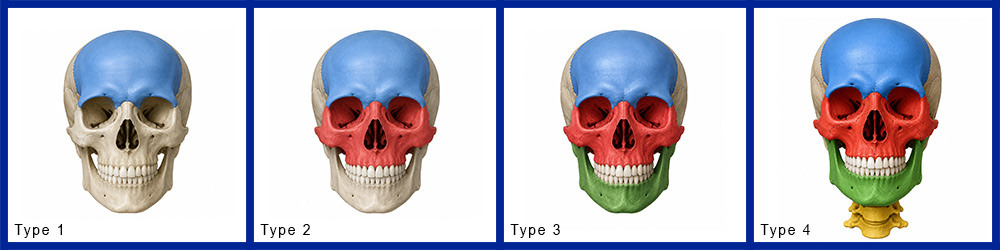
Type 1: Forehead – this is similar to an endoscopic brow lift
Type 2: Forehead and midface
Type 3: Forehead, midface, and lower face
Type 4: Forehead, midface, lower face and neck
What are the Indications for Endoscopic Facelift Surgery?
The endoscopic facelift is designed to address specific signs of facial aging, particularly in the upper and mid-face regions. Understanding these indications helps you know whether this procedure might be right for you.
Drooping or sagging eyebrows are a primary indication for the endoscopic approach. As we age, the tissues that support the brow weaken, causing the eyebrows to drop. This can make you look tired, angry, or sad even when you feel perfectly fine. The endoscopic facelift can reposition the brows to a more youthful height.
Forehead wrinkles and horizontal lines across the forehead respond well to this technique. These wrinkles develop over time from repeated muscle movement and loss of skin elasticity. By adjusting the underlying muscles, the endoscopic facelift can smooth these lines and create a more relaxed appearance.
Frown lines, the vertical creases that form between the eyebrows, are another key indication. These lines can make you look worried or upset. The endoscopic technique allows Dr Ivo to release the muscles that cause frown lines, softening their appearance significantly.
Some patients experience vision impairment due to heavy, drooping brows. When excess skin and tissue accumulate above the eyes, they can push down on the eyelids and interfere with sight. The endoscopic facelift lifts this excess tissue and restores a clear field of vision.
Mild to moderate facial sagging in the midface area can also be addressed. While patients with significant skin laxity may need a traditional facelift, those with early to moderate aging changes often achieve excellent results with the endoscopic approach.
Patients seeking facial rejuvenation with minimal scarring are particularly good candidates. Because the incisions are small and hidden in the hairline, visible scarring is kept to a minimum.
Who is a Suitable Candidate for an Endoscopic Facelift?
Good candidates for an endoscopic facelift are adults who show early to moderate signs of facial aging and prefer a less invasive approach to rejuvenation. The procedure works best for specific types of patients. It is generally indicated for those patients in their late thirties to mid-fifties, although skin elasticity is equally important.
Ideal candidates typically have mild to moderate drooping of the brows and forehead. They may notice horizontal lines across the forehead, vertical frown lines between the eyes, or a general heaviness in the upper face that makes them look tired.
Patients with good skin elasticity tend to achieve the best results. The endoscopic technique tightens underlying structures, but it does not remove large amounts of excess skin. People with significant skin laxity or very loose facial skin may need a traditional facelift to achieve optimal results.
Candidates should be in good overall health. They should not have uncontrolled medical conditions that could increase surgical risks. Any existing health issues should be well managed before considering surgery.
Non-smokers make better candidates. Smoking impairs healing and increases the risk of complications. Patients who smoke should stop at least four weeks before and after surgery. According to research published in the Aesthetic Surgery Journal, smoking significantly increases complication rates in facial surgery patients.
Realistic expectations are essential. The endoscopic facelift creates meaningful improvement, but it is not designed for patients with severe facial aging. Those with extensive sagging, deep jowls, or significant neck laxity typically need more comprehensive procedures.
Patients who want to avoid extensive scarring are well suited to this approach. The small incisions hidden in the hairline leave minimal visible marks once healed.
Those with thinner hairlines should discuss scarring concerns with Dr Ivo. While endoscopic techniques minimise incision length, patients with sparse hair may have slightly more visible scars than those with fuller hair coverage.
General suitability for surgery
There are certain general criteria which can help establish a potential candidate’s suitability for surgery. These are discussed on our Patient Essentials page.
What Happens During the Endoscopic Facelift Consultation?
The consultation is an important first step in your endoscopic facelift journey. This appointment allows Mr Gwanmesia to assess your concerns and helps you understand whether this technique is right for you.
During the consultation, your medical history will be reviewed in detail. This includes past surgeries, current medications, allergies, and any existing health conditions. Information about your general health helps determine whether you can safely undergo surgery.
Dr Ivo will examine your face carefully. He will assess the position of your brows, the depth of forehead wrinkles, the quality of your skin, and the overall structure of your face. This evaluation helps determine whether the endoscopic facelift is appropriate or whether another technique would provide better results.
You will discuss your goals and concerns. What bothers you most about your appearance? What results are you hoping to achieve? Dr Ivo will explain what is realistic based on your individual anatomy. If the endoscopic approach is not the best choice for your needs, alternative procedures will be discussed.
The consultation covers the details of the procedure itself. You will learn how the endoscopic facelift is performed, what anaesthesia is used, and how long the surgery takes. The use of the endoscope and camera technology will be explained so you understand how the procedure differs from traditional techniques.
Recovery expectations will be explained clearly. You will learn about the timeline for healing, when you can return to work and normal activities, and what temporary side effects to expect.
Potential risks and complications will be discussed honestly. Understanding these helps you make an informed decision about proceeding with surgery.
Practical matters such as cost and scheduling will be covered. You will have the opportunity to ask any questions you may have.
Preparation for Endoscopic Facelift Surgery
General Preparation for Surgery
Dr Ivo’s clinic puts patient safety first and foremost. We perform rigorous checks on every patient’s underlying health and general physical condition before proceeding with any surgery. Our Patient Essentials page provides key pre-surgery information about eligibility (‘are you a suitable candidate for surgery’), what standard preparations you should make on the day of a surgery and also the risks we are obliged to make you aware of.
Specific preparation for ENDOSCOPIC FACELIFT Surgery
Proper preparation helps ensure the best possible outcome from your Endoscopic Facelift. Dr Ivo will provide specific instructions, but there are general guidelines that apply to most patients.
Recovery After the Endoscopic Facelift
Recovery from an endoscopic facelift is generally faster and more comfortable than recovery from traditional facelift surgery. Understanding what to expect helps you plan appropriately.
Immediately after surgery, you may have small dressings over the incision sites. There will be some swelling and possibly mild bruising around the forehead and eyes. This is normal and expected.
Apply cold compresses as directed to help reduce swelling. Keep your head elevated, especially when sleeping, to minimise fluid accumulation. Take any prescribed medications as instructed.
Your vision may be slightly blurry for several days after surgery. This is temporary and resolves as swelling decreases.
Most patients can return to work within one to two weeks. By this time, the most visible swelling has typically subsided. Some patients feel comfortable returning sooner, while others prefer additional time.
Sutures or staples are usually removed within seven to ten days after surgery. The incision lines will be pink at first but will fade significantly over the following months.
Avoid strenuous exercise, heavy lifting, and activities that significantly raise your heart rate for at least two to three weeks. Resume regular exercise only with Mr Gwanmesia’s approval.
Results become visible within a few weeks as swelling resolves. The minor incision lines continue to refine over the following year. Most patients see their final results within three to six months after surgery.
Protect your skin from sun exposure during healing and afterward. Sun protection helps maintain your results and prevents premature aging.
Risks of the Endoscopic Facelift Procedure
General risks
All surgical procedures carry some degree of risk. Understanding these risks helps you make an informed decision about whether an Endoscopic Facelift is right for you. More information can be found on our Patient Essentials page.
Risks specific to ENDOSCOPIC FACELIFT Surgery
The minimally invasive nature of this technique does reduce certain risks compared to traditional facelift surgery.
Bleeding and haematoma are possible after any surgical procedure. A haematoma is a collection of blood beneath the skin that may require drainage. The smaller incisions used in endoscopic surgery typically result in less bleeding than traditional techniques.
Nerve injury is a concern with any facial surgery. Temporary numbness, tingling, or changes in sensation are common immediately after surgery and usually resolve within weeks to months. Permanent nerve damage is rare, and the endoscopic approach may reduce this risk because Dr Ivo can visualise the nerves directly through the camera.
Scarring is minimal with the endoscopic technique because incisions are small and hidden in the hairline. However, some patients may develop more visible scars, particularly those with thinner hair or those prone to abnormal scarring.
Elevated hairline is a potential concern. In some cases, the incisions or tissue repositioning may slightly change the position of the hairline. This is more common with traditional techniques but can occur with endoscopic surgery as well.
During your consultation, Mr Gwanmesia will discuss all potential risks and explain how the endoscopic technique helps minimise complications.
In summary
An endoscopic facelift offers a minimally invasive option for patients seeking facial rejuvenation with less scarring and faster recovery. By using advanced camera technology and small incisions, this technique provides precise results with reduced downtime. If you are considering an endoscopic facelift and want to learn whether you are a suitable candidate, contact Mr Ivo Gwanmesia’s office to schedule your consultation.
Schedule A Consultation
Endoscopic Facelift FAQ
An endoscopic facelift uses small incisions and a camera to reposition facial tissues, resulting in less scarring and faster recovery. A traditional facelift uses longer incisions and is better suited for patients with significant skin laxity. The endoscopic approach works best for the upper and mid face, while traditional techniques address the lower face and neck more comprehensively.
The surgery typically takes two to three hours to complete. It is performed under general anaesthesia as an outpatient procedure, meaning you go home the same day.
Scarring is minimal. The incisions are small, typically less than one centimetre each, and are hidden within the hairline. Most patients find that their scars are very difficult to see once fully healed.
Results can last many years, though the face will continue to age naturally. Healthy lifestyle choices, sun protection, and good skincare help maintain results. Some patients choose maintenance treatments like injectables to extend their outcome.
Most patients return to work within one to two weeks. Some swelling may still be present, but it is usually not very noticeable. Jobs requiring physical activity may require additional recovery time.
The procedure is performed under general anaesthesia, so you feel no pain during surgery. Afterward, most patients experience mild discomfort, tightness, and swelling rather than significant pain. Prescribed medication and cold compresses help manage any discomfort.
Yes, the endoscopic technique is often combined with other facial procedures for comprehensive rejuvenation. Common combinations include eyelid surgery, traditional facelift for the lower face, and fat grafting. Mr Gwanmesia will discuss which combination best addresses your concerns.
Age alone does not determine suitability. The key factors are the degree of aging, skin quality, and overall health. Some older patients with mild aging changes are excellent candidates, while younger patients with significant laxity may need different approaches. A consultation will determine the best option for you.
Pricing depends on the extent of the procedure and whether additional treatments are combined. A detailed quote is provided during your consultation after assessing your individual needs.
In general, pricing is as follows:
- Endoscopic Facelift Type 1 – £5750
- Endoscopic Facelift Type 2 – £10500
- Endoscopic Facelift Type 3 – £13750
- Endoscopic Facelift Type 4 – £20500
The endoscopic technique primarily addresses the upper face, including the forehead, brows, and area around the eyes. It can smooth forehead wrinkles, lift drooping brows, and reduce frown lines. For comprehensive facial rejuvenation including the lower face and neck, additional techniques may be recommended.


