PRP Treatment for Hair Loss: How Platelet-Rich Plasma Helps Restore Thicker, Healthier Hair
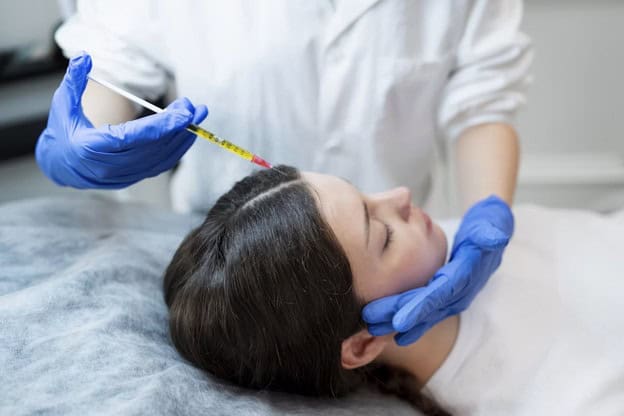
PRP treatment has become one of the most popular non-surgical ways to slow hair loss and encourage thicker, healthier growth. If you have noticed more hair in the shower drain, a widening parting, or a hairline that is not what it used to be, you are far from alone.
Thinning hair affects both men and women, and it can take a real toll on confidence. The good news is that there are options that do not involve surgery, and platelet-rich plasma therapy is one of the most widely used.
Rather than adding new hair, this approach works with what you already have. It uses the natural healing power of your own blood to wake up tired hair follicles and support stronger growth. For people in the early to moderate stages of hair loss, it can be a simple and effective place to start.
What Is PRP Treatment and How Does It Work
PRP stands for platelet-rich plasma. Your blood is made up of red cells, white cells, plasma, and platelets. Platelets are best known for helping blood to clot, but they also carry a rich mix of growth factors. These are the proteins that tell your body to repair tissue and build new blood vessels.
A PRP treatment concentrates those platelets and delivers them straight to the scalp. The process is straightforward. A small sample of blood is drawn, much like a routine blood test. That sample is then placed in a centrifuge, a machine that spins quickly to separate the blood into layers. This isolates the plasma that is packed with platelets and growth factors.
The concentrated plasma is then injected into the areas of the scalp where hair is thinning. The growth factors it contains, including fibroblast growth factor, vascular endothelial growth factor, and epidermal growth factor, help stimulate the hair follicles.
They can improve blood supply to the scalp, extend the active growing phase of the hair cycle, and encourage each strand to grow thicker and stronger.
Because the plasma comes from your own body, there is no risk of an allergic reaction or of catching a disease from a donor. This is one of the reasons the treatment appeals to so many people looking for a low-risk starting point.
Who PRP Treatment Can Help
Not everyone is an ideal candidate, and being honest about this from the start saves disappointment later. The best results come from people who still have active follicles that are underperforming rather than follicles that have stopped working altogether.
In practice, this means the approach works best for those with early to moderate thinning. If you are noticing reduced density, a thinner ponytail, or gentle recession, there is likely still enough follicle activity to respond. People who have very recently begun to lose hair often see the strongest response, as the follicles have not yet gone dormant.
Those who are completely bald in an area are unlikely to benefit, because there are no active follicles left to stimulate. In these cases, surgical restoration is usually the better route, and there are helpful resources on how to improve your hairline worth reading before deciding.
Most cases are a form of androgenetic alopecia, the common hereditary pattern that affects both men and women. Both men and women can be suitable. Women in particular tend to experience diffuse thinning across the scalp rather than the patchy pattern more common in men, and platelet-rich plasma can be a good match for this kind of loss.
If you want to understand the wider picture for female hair loss, there are useful solutions for thinning hair covered elsewhere.
People with certain health conditions, such as a low platelet count, blood disorders, or active scalp infections, may not be suitable. A proper assessment will always come first.
What Happens During PRP Treatment
One of the reasons PRP treatment is so popular is that it is quick and involves very little downtime. A typical session takes around thirty to sixty minutes from start to finish.
The session begins with the blood draw. A small amount of blood is taken from your arm and placed in the centrifuge. While the plasma is being prepared, the scalp is cleaned and, if needed, a numbing cream or local anaesthetic is applied to keep you comfortable.
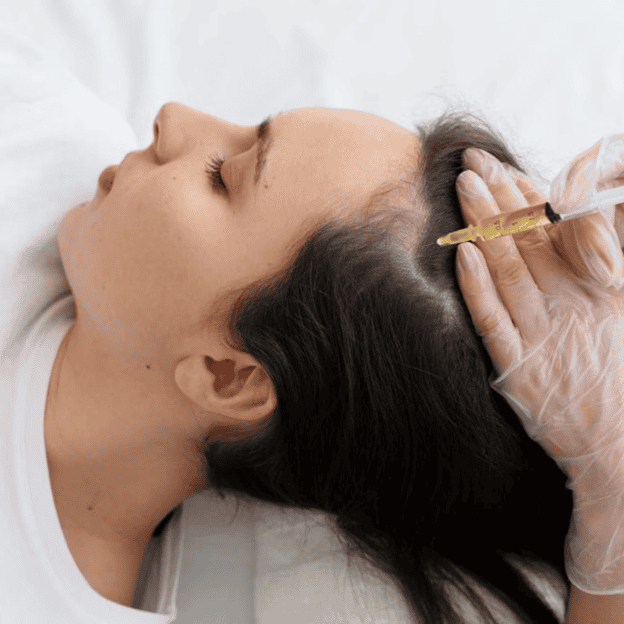
Once the plasma is ready, it is drawn into a fine needle and injected into the scalp at the level of the hair follicles. The injections are spread across the thinning areas in a careful pattern to cover the whole region evenly. Most people describe the sensation as mild, similar to small pinches.
Afterwards, you can usually return to your normal day almost straight away. There may be some tenderness, mild redness, or slight swelling at the injection sites, but this tends to settle within a day or two.
A review of the literature reports that side effects and downtime are generally minimal. You will be given simple aftercare advice, such as avoiding vigorous washing or heavy exercise for a short period.
Platelet-rich plasma is not a one-off fix. Most protocols involve a course of three initial sessions spaced roughly four to six weeks apart. After this starter phase, maintenance sessions every four to six months help keep the results going. Your practitioner will tailor this schedule to your response.
What Results to Expect and When
Patience matters with PRP treatment. Hair grows slowly, so you will not walk out of a session with visibly thicker hair. Instead, the changes build gradually over months as the follicles respond and the hair cycle shifts in your favour.
Many people first notice that hair loss appears to slow down, which is often the earliest and most reassuring sign. Over the following months, existing hairs may start to look thicker and healthier, and some previously dormant follicles may begin producing new growth.
Most people begin to see a difference a few months after completing their first course of sessions. A systematic review and meta-analysis of clinical trials found that platelet-rich plasma increased hair density compared with placebo, although results varied between studies.
It is important to set realistic expectations. This approach can improve density and hair quality, but it does not create dense coverage where follicles have already been lost. It works best as a way to protect and strengthen the hair you still have.
Understanding results and longevity across different hair restoration methods can help you weigh up which route suits your situation.
Results are not permanent on their own. Because hair loss is an ongoing process, stopping treatment will usually mean the benefits fade over time. This is why the maintenance schedule matters.
Combining PRP With Other Hair Restoration Options
Platelet-rich plasma does not have to be used alone. In fact, it often works well as part of a wider plan.
Some people use it as a standalone therapy in the early stages of thinning. Others combine it with medications such as those that block the hormone linked to pattern hair loss. Used together, these approaches can support the hair from more than one angle.
It is also increasingly used alongside surgical hair restoration. When paired with a transplant, the growth factors in the plasma can support healing in both the donor and recipient areas and may help the newly moved follicles settle in. Some people have sessions before, during, and after their surgery to give the grafts the best possible foundation.
At his Harley Street clinic, Mr Ivo Gwanmesia assesses each person individually to decide whether platelet-rich plasma alone is enough or whether combining it with other options will give a better outcome. That personal assessment is the key to a sensible plan.
PRP treatment
https://unsplash.com/photos/woman-receives-a-hair-treatment-injection-xb-6wrS8wwI
Is This the Right Choice for You
Deciding how to tackle hair loss is a personal choice, and there is no single right answer for everyone. The best first step is a proper consultation, where your scalp and the pattern of your hair loss can be examined in detail.
During that appointment, your medical history will be reviewed, the health of your follicles assessed, and realistic goals discussed. You will learn whether the early to moderate thinning you are experiencing is likely to respond and how many sessions might be needed. If a different or additional approach would serve you better, an honest practitioner will tell you.
For many people worried about the earliest signs of thinning, a course of PRP treatment offers a low-risk, non-surgical way to protect their hair and encourage stronger, healthier growth over time.
Frequently Asked Questions (FAQs)
1. Is PRP Treatment Painful?
Most people find it very tolerable. The blood draw feels like a normal blood test, and the scalp injections feel like small pinches. A numbing cream or local anaesthetic can be used to keep you comfortable, and any tenderness afterwards usually settles within a day or two.
2. How Many Sessions Will I Need?
A typical starting course involves three sessions spaced around four to six weeks apart. After that, most people have maintenance sessions every four to six months to keep the results going. Your exact schedule depends on how your hair responds.
3. When Will I See Results?
Because hair grows slowly, changes appear gradually over several months. Many people first notice that shedding slows, followed by improvements in thickness and quality. Visible results usually become clear a few months after completing the first course.
4. Are the Results Permanent?
No treatment stops hair loss forever, because thinning is an ongoing process. The benefits are maintained through regular top-up sessions. If you stop entirely, the improvements tend to fade over time as natural hair loss continues.
5. Can It Be Combined With a Hair Transplant?
Yes. Platelet-rich plasma is often used alongside surgical restoration. The growth factors can support healing and help transplanted follicles settle in. Many people have sessions before and after their procedure to give the grafts the best chance of thriving.


